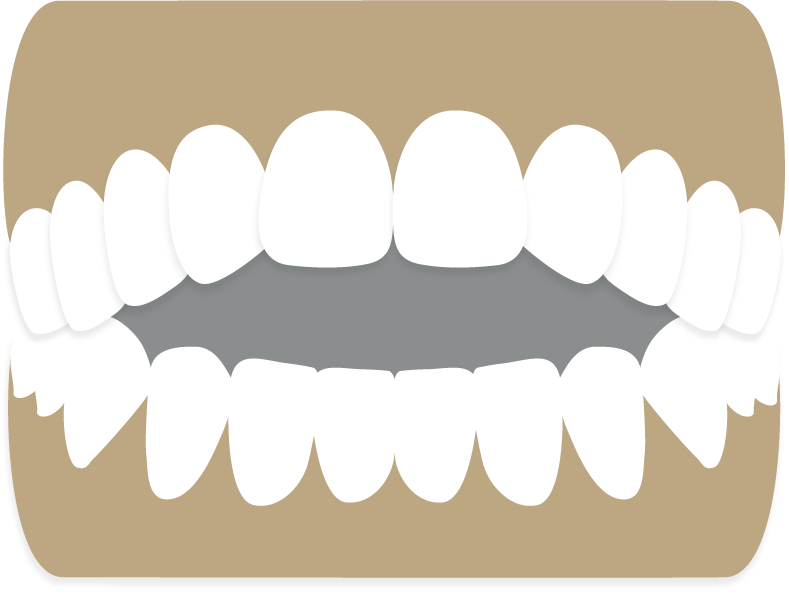
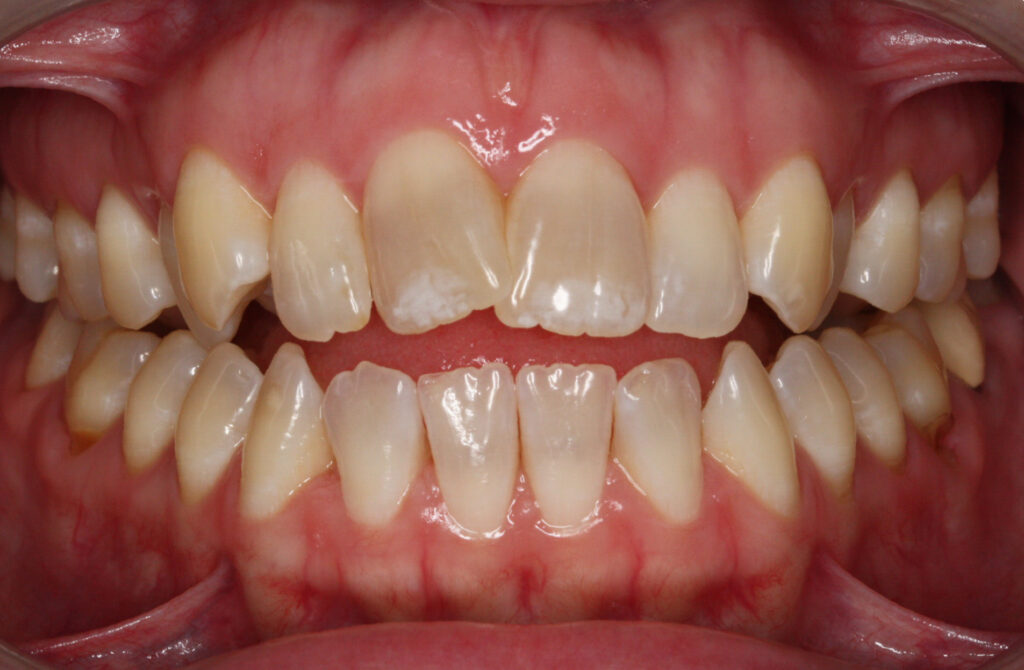
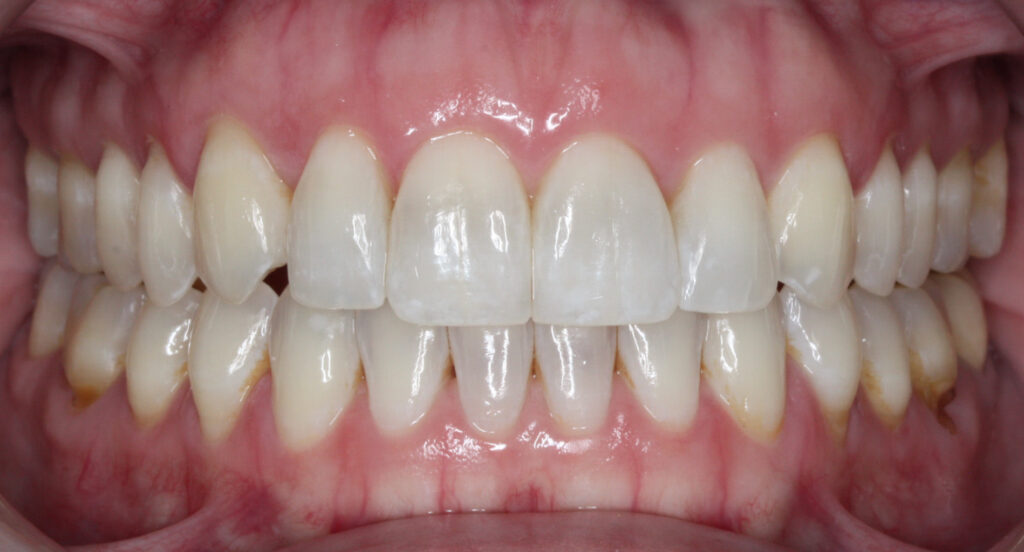
An anterior open bite occurs when the upper and lower front teeth do not touch when the back teeth are together. This can affect biting, speech, and the appearance of the smile.
The good news is that many anterior open bites can be treated successfully with orthodontics. Depending on the severity and cause, treatment may include braces, clear aligners, or orthodontics with Temporary Anchorage Devices (TADs).
Many mild anterior open bites, especially those around 2–3 mm, can often be corrected with braces or clear aligners.
Carefully planned tooth movement can help bring the upper and lower front teeth together, improving both function and smile aesthetics.
The right approach depends on the cause of the open bite, the position of the teeth, and the relationship between the upper and lower jaws.
Larger anterior open bites can be more challenging to correct. In many cases, simply moving the front teeth together is not the best solution.
Instead, we may need to gently move the upper back teeth upward through a process called posterior tooth intrusion. For these cases, Temporary Anchorage Devices, or TADs, can provide the stable anchorage needed to create precise movement that may not be possible with braces or clear aligners alone.
Small TADs may be placed in the roof of the mouth and connected to a custom metal framework that extends across the palate to the upper back teeth. Small nickel-titanium springs provide gentle, continuous pressure to gradually move the back teeth upward.
As the back teeth are intruded, the lower jaw can rotate upward and forward, helping the front teeth come together and improving the overall bite.
The palatal appliance is typically worn for approximately six months, although treatment time varies from patient to patient.

Traditionally, adults with a significant skeletal open bite may have required jaw surgery to reposition the upper jaw.
Today, TAD-assisted orthodontic treatment may allow us to create a similar effect by intruding the upper back teeth instead. As those teeth move upward, the lower jaw can rotate upward and forward, helping close the open bite.
For appropriately selected patients, this can provide an alternative to jaw surgery. TADs cannot replace surgery in every case, but they have significantly expanded the treatment options available for patients with more severe anterior open bites.
Every open bite is different, which is why a detailed evaluation of the teeth, jaws, facial proportions, growth pattern, and severity of the bite is essential before determining the right treatment approach.
Anterior open bite treatment is especially meaningful to Dr. Nicole Scheffler because she has experienced it herself.
Dr. Scheffler had an anterior open bite and underwent jaw surgery to correct it. That experience helped inspire her interest in finding less invasive ways to treat patients facing similar problems.
Dr. Scheffler has published peer-reviewed research on anterior open bite correction with TADs and posterior tooth intrusion in both the Journal of Clinical Orthodontics and the American Journal of Orthodontics and Dentofacial Orthopedics.
Today, she uses that experience and research to determine whether patients can be successfully treated with braces, clear aligners, TADs, or, when necessary, jaw surgery.
Our goal is to create a bite that is functional, attractive, and stable while using the least invasive treatment that can provide a successful result.
If you or your child has an anterior open bite—or if you have been told that jaw surgery may be necessary—we would be happy to evaluate your bite and discuss your options.
Schedule a complimentary consultation at our Boone or North Wilkesboro office to learn which open bite treatment approach may be right for you.
If you or your child has an anterior open bite—or if you have been told that jaw surgery may be necessary—we would be happy to evaluate your bite and discuss your options.
Schedule a complimentary consultation at our Boone or North Wilkesboro office to learn which open bite treatment approach may be right for you.